
FEMA has released the first half of its one billion dollar Counter-UAS Grant Program, and the cities hosting the 2026 FIFA World Cup are at the front of the line. This first phase includes $250 million dedicated to the states supporting the 11 host metros: Atlanta, Boston, Dallas and Arlington, Houston, Kansas City, Los Angeles, Miami, New York City, New Jersey, Philadelphia, Seattle, and the San Francisco Bay Area.
If your city’s emergency management, police leadership, or public safety teams are responsible for securing these events, this opportunity is built for you. The challenge is timing. The application deadline is December 5, and your state can only submit strong, competitive projects if your city provides a clear plan now.
This blog explains what FEMA is looking to fund, what a modern and capeable cUAS program requires, and how our team can help yours take the steps needed to build a compliant, operational, and grant-ready plan.
Our team is here to equip you with the information you need to inform your grant request and provide the in-depth consultation required to build a cUAS plan that, protects your community, and stands up to both the intense operational demand and FEMA’s scoring model.
Begin Your Consultation With A Team That Builds Layered, City-Scale Airspace Security — Not Just Hardware Lists.
Start Here
The Purpose of This Funding: Protecting High-Visibility Events from Airspace Risks
Unlike general homeland security funding, FEMA created the cUAS Grant Program to help state and local agencies stand up essential drone detection and response capabilities ahead of large scale events that bring global attention and elevated risk.
The World Cup is exactly that. Stadiums, fan zones, transportation corridors, and critical infrastructure will draw millions of people across multiple weeks. Airspace awareness cannot be an afterthought. FEMA is funding the sensors, software, training, and deployment models required to give cities a fuller picture of what is actually happening in their skies.

What a cUAS System Must Do
A modern counter-drone system is built around DTIM: Detection, Tracking, Identification, and Mitigation where authorized. FEMA expects cities to build solutions that cover as much of that chain as their laws and authorities allow. The core components of DTIM are well-established, and understanding them will help your team shape a clear, defensible proposal.
These are the primary capabilities FEMA expects cities to consider:
RF Detection
RF sensors detect the signals between a drone and its controller. This provides early warning, directional information, and in many cases the drone’s make, model, and identification details.
Radar
Radar provides range, speed, altitude, and flight path data. It sees physical movement in the airspace even when no RF signal is present. It is essential for broad area coverage.
EO and IR Cameras
Electro-optical and infrared cameras confirm what radar and RF detect. This gives operators visual identification day or night and allows teams to validate threats in real time.
Remote ID
Remote ID receivers read identification messages broadcast by compliant drones. This gives cities a way to separate authorized commercial and recreational flights from unknown aircraft.
FEMA is not looking for a single sensor. They are looking for a layered approach that gives cities a complete picture. A strong proposal shows how these sensors work together rather than sitting in isolation on a spec sheet.
What Makes A Competitive Proposal
Cities often overthink this section, but the scoring criteria are straightforward. Strong submissions share the same foundational elements and reflect a clear understanding of how the city plans to use cUAS capabilities during the World Cup and America 250 events.
Competitive concepts typically:
- Define a specific operational problem tied to the city’s event responsibilities.
- Outline a layered detection strategy that incorporates RF, radar, EO/IR, and Remote ID.
- Show how airspace data will feed into existing systems like command centers, CAD, or situational awareness platforms.
- Present a deployment timeline that can bring the system online within six to twelve months.
- Include a training and exercise plan that prepares operators, analysts, and supervisors for real mission environments.
- Demonstrate how the system will support both World Cup operations and ongoing city-wide airspace security.
- Commit to performance tracking: system usage hours, detections, distinct aircraft, and investigative outcomes.
When these elements are articulated clearly, your SAA can build a justification that competes well in the national review. When they’re missing or vague, the project becomes much harder for the state to justify.
Where to Begin? A Roadmap for Host Cities Navigating the cUAS Grant Process
These steps apply to every host metro. The order matters, and starting correctly will save your team weeks of work and give your SAA a focused, grant-aligned concept.
1. Start with a consultation from a team that understands city-scale cUAS
Before defining coverage zones or drafting technical requirements, begin with a team that understands how cUAS works at the city level. This is where UVT steps in. Our team helps cities clarify their operational needs, interpret the NOFO, and outline a cUAS approach that fits their environment, authorities, and mission objectives
This early alignment becomes the foundation for every decision that follows.
Partner with a team that builds cUAS programs to stay Always On — just like your mission.
Connect With Our Team
2. Define the areas your city must secure
With initial guidance in place, identify the stadium, fan zones, practice fields, transit corridors, and supporting infrastructure that fall under your responsibilities. This establishes the footprint for your airspace design and directly informs sensor placement and coverage expectations.
3. Identify the existing systems that need to ingest cUAS data
Command centers, dispatch systems, video platforms, fusion centers, and situational awareness tools all need to receive the same airspace picture. FEMA expects integration, not isolated sensors. Mapping these systems now ensures the architecture you build will fit your operations on day one.
4. Engage your State Administrative Agency early
The SAA is the only entity that can submit the application. Once your initial footprint and integration points are defined, bring the concept to the SAA so they can begin shaping budget structure, justification language, and priority alignment. The clearer your concept, the easier it is for them to elevate it.
5. Build a high-level DTIM architecture
This is not the time for engineering drawings or SKU lists. Instead, assemble a defensible, high-level design that explains how RF detection, radar, EO/IR, and Remote ID work together to support your operational needs. Your SAA will use this to finalize the proposal and align the investment with FEMA’s expectations.

Why Cities Work With UVT
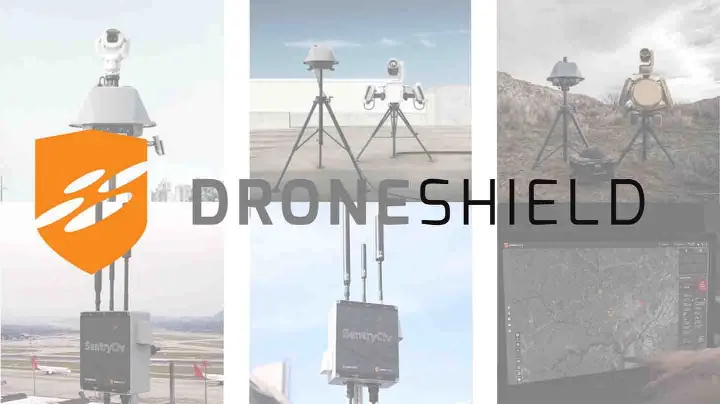
UVT is the integrator cities rely on for full scale, city-wide cUAS planning. Our team works daily with state, local, and federal agencies to deploy DroneShield’s RF, radar, and multi-sensor technologies across complex environments.
Cities choose UVT for four reasons.
1. We build cUAS systems for real operations
Our focus isn’t hardware. It’s partnering with you to understand and overcome your airspace security challenges. We design layered environments that align with mission needs, real-world constraints, and the way your teams actually work.
2. We understand how to make these systems work inside your existing workflows
Command centers, dispatch systems, video platforms, and situational awareness tools all need clean, unified airspace data. UVT ensures your cUAS architecture fits your daily operations, not the other way around.
3. We know the grant landscape and how to align with it
Our team helps agencies structure their concepts around FEMA’s scoring model so SAAs can submit competitive, defensible proposals without guesswork or rework.
4. We are Always On
cUAS programs don’t end at installation. They evolve. UVT remains with you well beyond deployment, training, exercises, and planning—a lifetime partnership built on world-class support.
Your Next Step
If your city is one of the 11 host metros, you are in the priority group for this first round of funding. The timeline is tight and the competition is real.
Your next step is simple Connect With Us.
When you bring our team into the conversation, we help your emergency management leaders and your SAA build a custom curated cUAS plan that positions your city for this grant cycle and strengthens your airspace security for years to come.
